

Reduce risk of combine fires with regular preventative maintenance
Examine combine electric and hydraulic systems, and keep the machine free of dust and chaff when performing daily maintenance.
In dry conditions, the risk of combine fires increases.
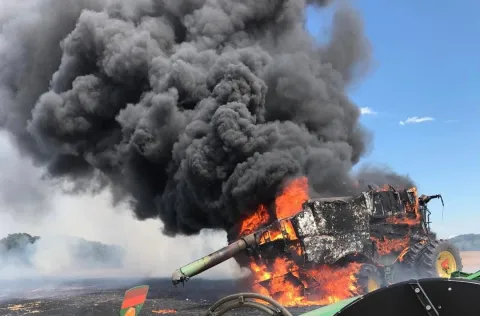
Angie Johnson, North Dakota State University Extension farm and ranch safety specialist, urges farmers to stay current with necessary maintenance and to check conditions to prevent equipment failures and fires. She says equipment fires, specifically combine fires, are a
serious threat during the harvest season.
“No one wants to lose their combine or the remaining unharvested crop,” says Johnson. “The biggest risk, however, is the loss of human life. Combines, crops and other equipment can be replaced – you cannot.”
While performing daily maintenance and repairs, take time to examine the combine’s electric and hydraulic systems and keep the machine clean of dust and chaff.
“Keep the engine compartments as clean as possible and clear off chaff and dirt often by using an air compressor or leaf blower,” says Johnson. “Additionally, it is critical to properly route or restrain wires and hoses so they do not rub or get cut by moving parts.”
Hydraulic systems are prone to small leaks, and they may produce oily residues. Hydraulic oil combined with crop dust is a ready and common fuel source that will burn if ignited.
Chaff and dust are produced during small-grain harvest and consist of fluffy, dry material that finds its way into almost all machine parts. A combine that is not thoroughly cleaned periodically will have highly combustible material tucked into numerous places, ready to become a fuel source for fire.
“If your combine is on fire, shut off the machine and call your fire department right away,” says Johnson. “By calling early, before the fire engulfs your combine and spreads further, firefighters can work to help protect your investment while also keeping you out of harm’s way.”
The dust and chaff produced by harvest crops can be ignited by many sources:
- Worn-out and damaged bearings
- Engine components, such as the exhaust manifold and turbocharger, which produce exhaust gases exceeding 1,000 degrees Fahrenheit
- Friction between plant parts rubbing together
- Electrical shorts or arcs
Johnson urges farmers to consider the following tips for reducing the risk of combine fires while harvesting crops:
- Walk around the combine before the start of each day during harvest season. Use an air compressor or leaf blower every day when the machine is off and cooled down to remove dirt, dust, chaff and other plant residue that has accumulated. Always wear hearing, eye and respiratory protection, such as an N95 mask. While blowing off residue, look in high-risk areas, such as the engine and engine compartments, hydraulic pumps and pump drives, gear boxes, batteries and cables. When cleaning, take time to look for any issues that require repair, such as leaking hydraulic hoses that can be a perfect place for chaff to stick and build up, creating an easy fuel source for a fire.
- Service the machine daily based on the combine’s operator manual. Grease and lubricate bearings and chains, and continue to look for areas that have excessive wear or damage.
- Watch for wiring issues. Today’s combines are controlled by many sensors and highly complex electrical components. Take time to inspect wiring systems to see where wires appear unrestrained or damaged by rubbing or contact with moving parts. Blown fuses are a sign of underlying electrical problems.
- Use an infrared thermometer to determine the operating temperature of the combine’s bearings. Hot bearings are a combustion source. Warm up the combine before taking it to the field, safely open the combine’s shields, and from a safe distance, point the thermometer at a bearing to read the measured temperature. If one bearing is much hotter, it may be worn or damaged. Replace the bearing as soon as possible. Infrared thermometers are inexpensive (less than $50) and available at many hardware and farm stores. Another great time to check the temperature of the combine’s bearings is while waiting for the truck or grain cart.
- Listen for unusual noises and watch for warning lights. The check engine light is there for a reason – if it turns on, stop and evaluate the situation. A small repair now may avoid a fire later.
- Install an air intake kit. An air intake kit allows clean air above the combine’s “dust cloud” to enter the combine’s air intake screen, rather than dusty, dirt-filled air produced from harvesting. Take the time to consider an option that will work best for you and your combine.
- Avoid combining during fire danger conditions and when it is hot and dry. Relative humidity is low in the fall, increasing the risk of fire, especially in the late afternoon when temperatures rise. Limit the harvesting of soybeans that are extremely dry. Keep an eye on wind speeds. As hard as it is to shut down for the day when conditions are favorable for harvesting, stopping when humidity is low with gusty winds could prevent losing the combine to a fire. Be aware and find out if your area is in a fire danger zone by accessing the interactive North Dakota Fire Declarations and Burn Restrictions Map from https://NDResponse.gov/burn. Pay particular attention to the Fire Danger Ratings and Red Flag Warning/Fire Weather Watch tabs within the interactive map.
- Carry two fully charged fire extinguishers. Each combine should have two 20-pound ABC fire extinguishers – one in the cab and one on the outside, near ground level. Have them ready and operational, and review with workers how and when to use them. Call 911 immediately to dispatch the local fire department, as fires can escalate quickly.
- Create a soil perimeter. Should a fire start, making a tillage pass around the field perimeter can help prevent it from spreading to other areas.
- Strategically park harvest equipment. While harvesting a field, park semis, trucks, pickups, tractors and grain carts in an area with minimal vegetation. Hot exhaust from these vehicles can ignite dry grass in the ditch. Before parking equipment and machinery in a shed or quonset for the night, let them cool down first to reduce the risk of a building fire.
“Before going out to combine, let others know your plans and field location,” Johnson says. “If you do not return when you say you will, have someone check to make sure you are OK.”
Johnson also recommends carrying a fully charged cellphone.
“Even though it may feel like you are slowing down your harvest progress by stopping the machine to clean off chaff and dust, it could be the difference between finishing your harvest season or watching it go up in smoke,” says Johnson.
For more information on crop harvest prevention techniques, visit the Crop Harvest Fire Protection Checklist.
