The report will have several short research reports from researchers conducting research on livestock and associated topics in ND. The target audience is people associated with the livestock industries in ND and elsewhere.
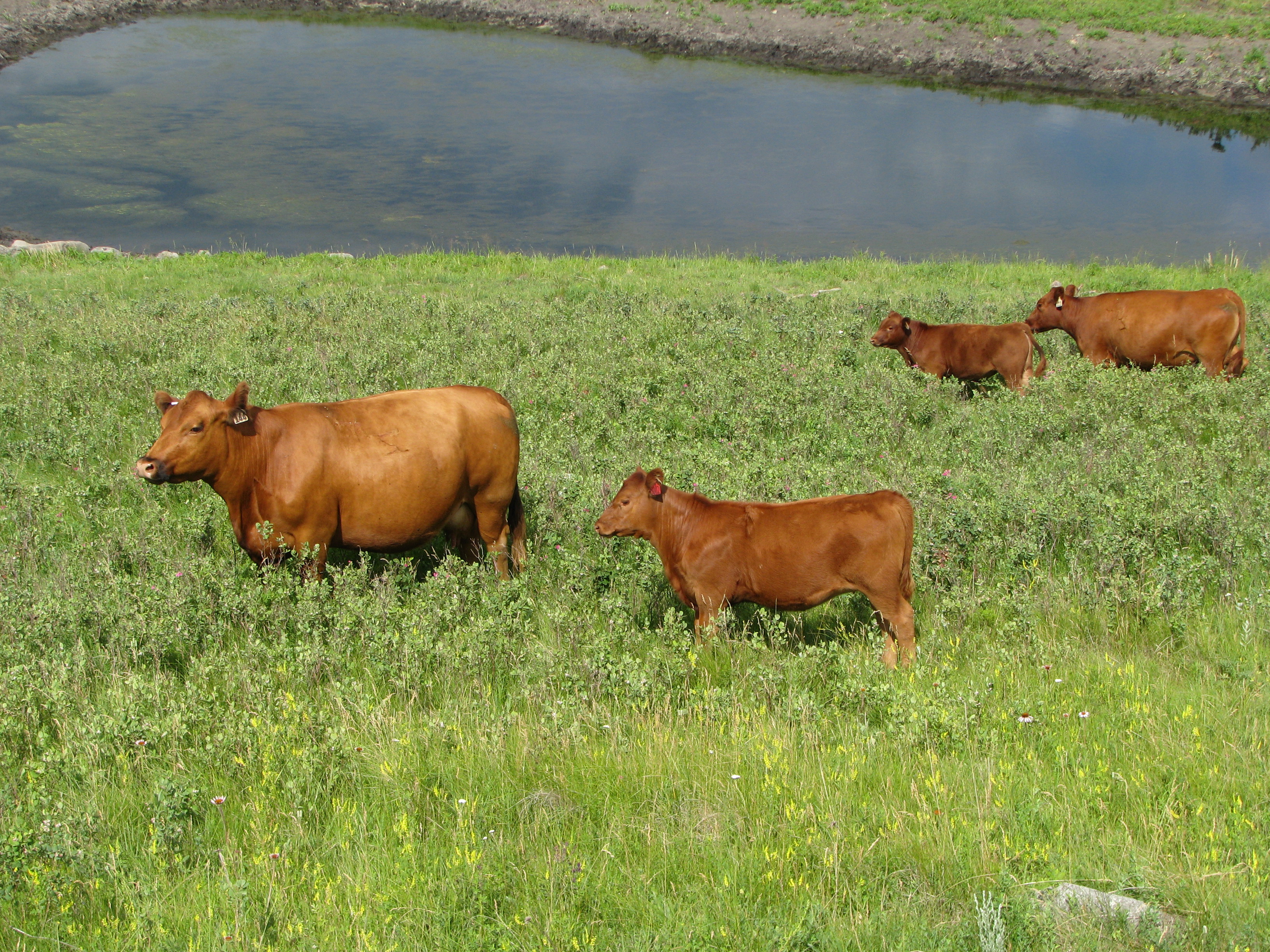
Drinking water from stagnant ponds and dugouts during hot, dry weather can cause sudden death in animals. This water can contain certain species of cyanobacteria, widely known as blue-green algae.
Water is an important, but often overlooked, nutrient. Livestock water requirements are affected by many factors, including size, productivity, diet and environmental conditions. Good water quality and cleanliness can increase water intake…
Water is an important, but often overlooked, nutrient. Livestock water requirements are affected by many factors including, size, productivity, diet and environmental conditions. Limited access or reduced water consumption can result in…
Providing adequate water to livestock is critical for animal health and production. The goal of this Extension program is to improve the quality of livestock water and reduce losses of livestock due to toxic water conditions during drought…
An electrical conductivity or total dissolved solids meter is a quick method to estimate total dissolved solids in water and determine water quality.