Butterflies & Moths of North Dakota
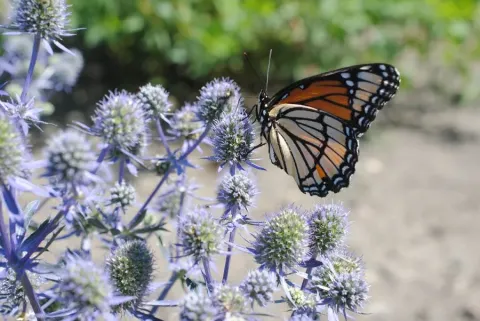
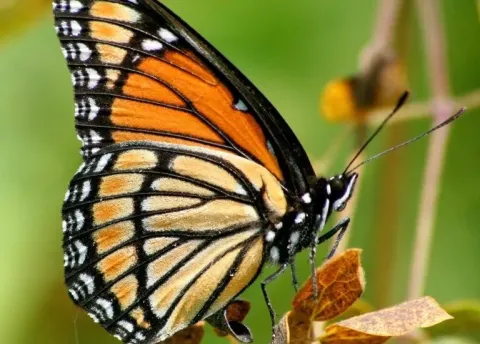
Adult butterflies forage for nectar from hundreds of flowers per day. These pollinators have a long proboscis to suck nectar from deeper, skinnier blooms that other nectar-foraging insects may have trouble reaching. Butterflies like plants with “landing pads,” which are essentially blooms on the end of strong stems that can support the weight of adult butterflies; purple prairie clover, globe thistle, and echinacea provide this type of structure. The viceroy (pictured right), is one of the common butterflies of North Dakota, along with the monarch, red admiral, and painted lady.
Moths, often overlooked, are significant pollinators—particularly at night when many flowers are replenishing their nectar. Flowers pollinated by moths are usually white or light-colored and have a strong scent, such as night-blooming jasmine, evening primrose, and mock orange.
For more information on butterflies in North Dakota, check out these resources:
Common Butterflies of North Dakota
Butterflies are an important pollinator for ornamental flowers and agricultural crops. There are hundreds of species of butterflies that forage for nectar on native and cultivated plants in the prairies and gardens of North Dakota. Discover the 31 most widely-spread and recognizable butterflies in our state, and learn their coloration patterns, foraging habits, and other notable characteristics.
Skippers
Skippers are named for their quick, darting flight patterns. Their wings are usually rounded with slightly tapered forewings, with a typical coloring of brown, gray, black, and/or white. Some of the skippers’ favorite nectar sources include thistle, alfalfa, and monarda (bee balm). The four most common skippers in North Dakota are the silver-spotted, checkered, Peck’s, and long-dash.
Not pictured: Peck’s skipper (Polites peckius), long-dash skipper (Polites mystic)
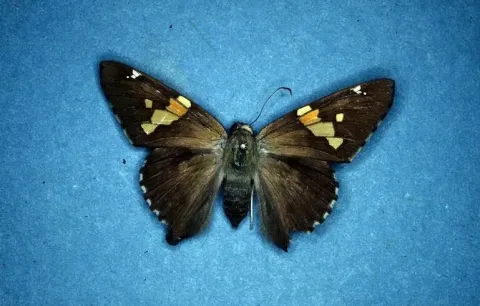
Silver-spotted skipper (Epargyreus clarus)
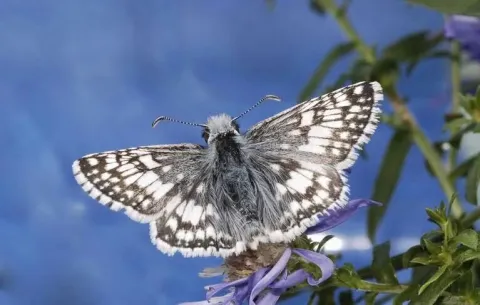
Checkered skipper (Pyrgus communis)
Swallowtails
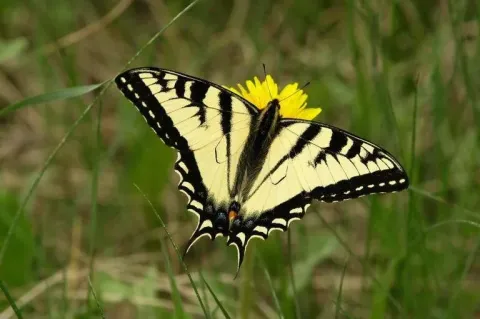
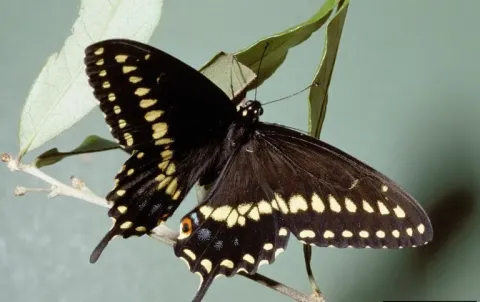
Swallowtails are some of the largest butterflies in the world, and are easily distinguished by the forked shape of their hindwings. While the majority of the species are tropical, two beautiful swallowtails can be found in North Dakota: the Canadian tiger, and black. Look for these butterflies on phlox, spirea, and sunflowers.
Canadian tiger swallowtail (Papilio canadensis)
Black swallowtail (Papilio polyxenes)
Sulfurs and Whites
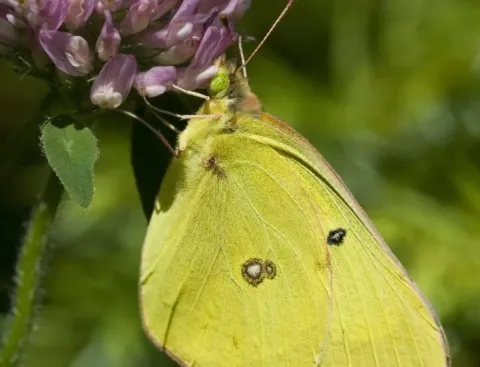
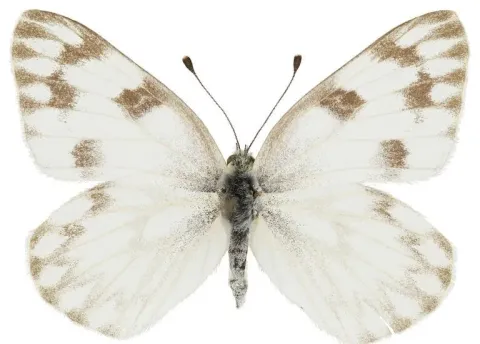
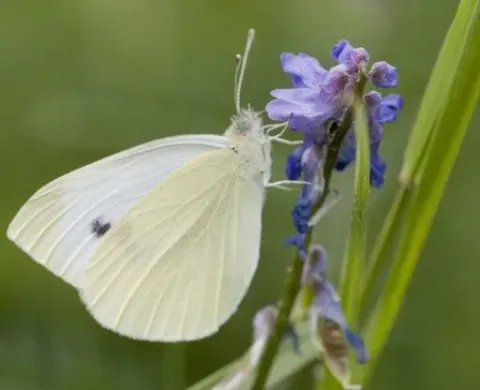
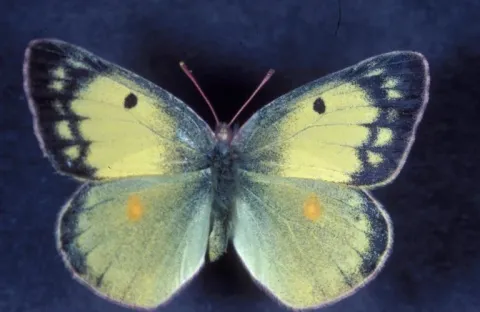
Because the Sulfur and White butterflies do not sequester toxins from the plants they eat, they are a well-loved prey by most insectivores. To combat this disadvantage, sulfurs and whites became nimble fliers to evade predators. Caterpillars of these species are excellent weed-eaters, but can sometimes become an agricultural pest on crops like alfalfa. Look for clouded sulfur, checkered white, cabbage, and alfalfa butterflies on milkweed, alfalfa, and vervain.
Clouded sulfur (Colias philodice)
Checkered white (Pontia protodice)
Cabbage butterfly (Pieris rapae)
Alfalfa butterfly (Colias eurytheme)
Gossamer-winged Butterflies
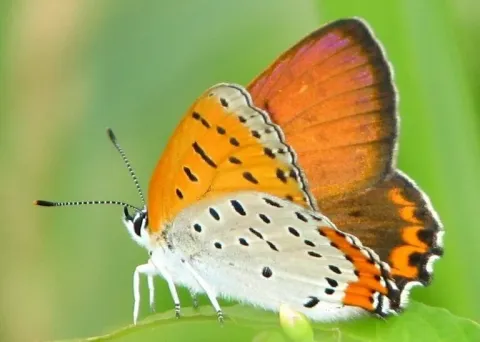
Lycaenidae (gossamer-winged butterflies), is the second-largest family of butterflies, consisting of about 30% of the known butterfly species worldwide. This family of butterflies are diverse eaters, enjoying not only nectar plants but also aphids, scale insects, and ant larvae. Common gossamer-winged butterflies in North Dakota include Melissa blue, eastern tailed blue, summer azure, gray hairstreak, coral hairstreak, gray copper, and bronze copper. Look for these species on dandelion, alfalfa, milkweed, and spirea.
Not pictured: gray copper (Lycaena dione), summer azure (Celastrina neglecta), gray hairstreak (Strymon melinus)
Melissa blue (Lycaenidae melissa)
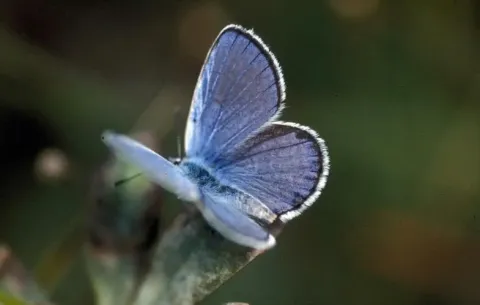
Eastern tailed blue (Cupido comyntas)
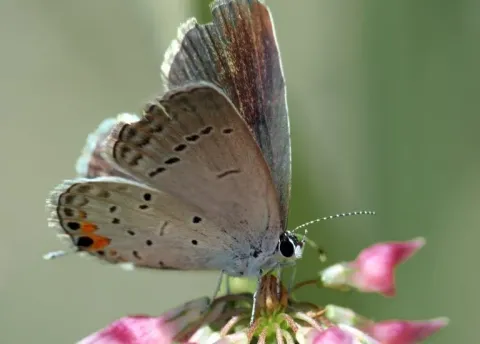
Coral hairstreak (Satyrium titus)
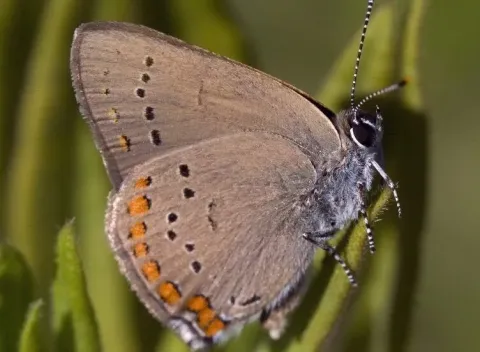
Bronze copper (Lycaena hyllus)
Fritillaries
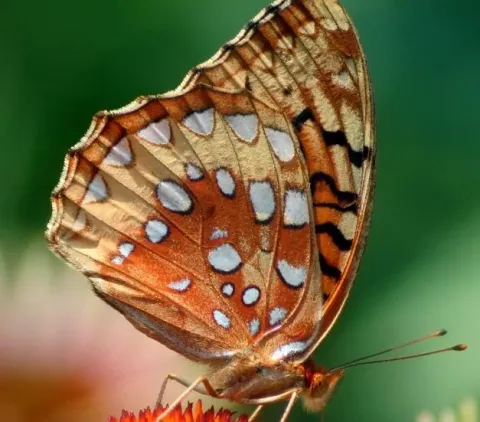
Fritillaries are sometimes mistaken for monarch butterflies because of their spectacular orange and black coloring. A spotted and vaguely checkerboard pattern found on most fritillaries serves as camouflage when the butterfly is resting in dappled sun and shade. Caterpillars of this species prefer violets, while adults of the species are more generalist eaters and can be found foraging on butterfly weed, milkweed, Joe-pye weed, and mint. The most common fritillaries in North Dakota are the variegated, great spangled, and regal.
Not pictured: regal fritillary (Speyeria idalia)
Variegated fritillary (Euptoieta claudia)
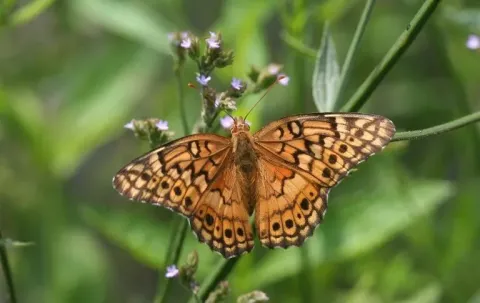
Great spangled fritillary (Speyeria cybele)
Checkerspots and Crescents
Checkerspots are named for the checkerboard pattern of orange, black, white, and dark red squares on the top of their wings. Crescents have similar coloration, though most are brown and orange with some white spots and streaks. Look for the northern crescent, pearl crescent, and gorgone checkerspot on fleabane, thistle, milkweed, and bee balm.
Not pictured: pearl crescent (Phyciodes tharos)
Northern crescent (Phyciodes cocyta)
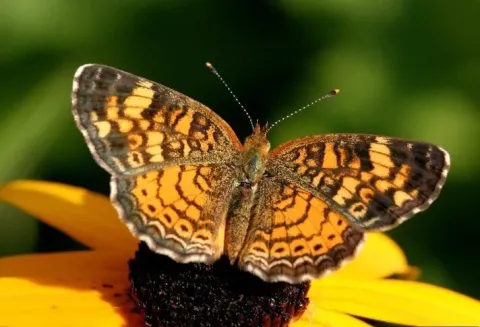
Gorgone checkerspot (Chlosyne gorgone)
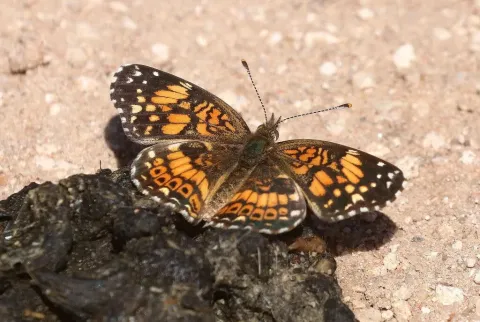
Angle-wings and Tortoiseshells
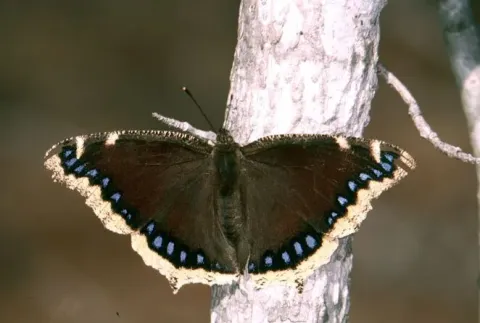
Recognized by their irregular wing edges, the angle-winged butterflies are usually a burnt orange and brown on the dorsal side of their wings, with a bark-like coloring on the ventral side of the wing. Tortoiseshell butterflies have a similar camouflage patterning that helps them to blend against tree bark. Both angle-wings and tortoiseshell butterflies can hibernate over winter. Comma, question mark, and mourning cloak butterflies can be found foraging on lilac in spring.
Question mark (Polygonia interrogationis)
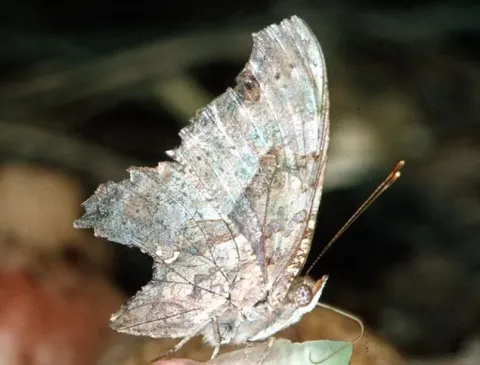
Comma butterflies (Polygonia c-album)
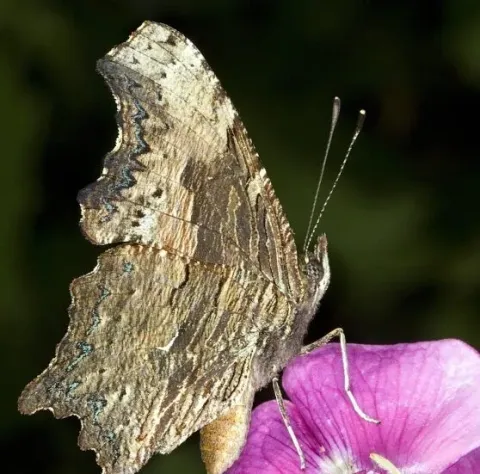
Mourning cloak (Nymphalis antiopa)
Thistle Butterflies
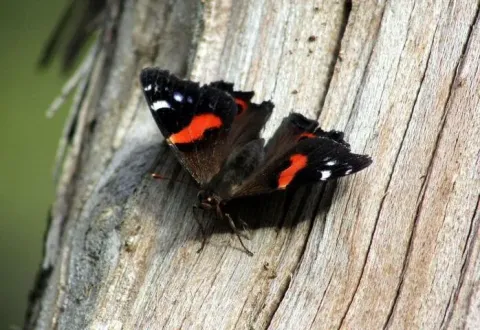
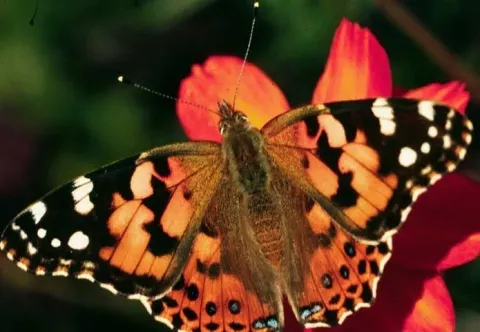
The thistle butterfly is named for its principal larval host plant, however, the larvae have a wide range of over 300 suitable host plants. As a generalist eater, this species is more resilient than species that depend on a single host plant. Like monarchs, adult thistles do not overwinter in the Northern Plains, but instead will migrate to Mexico to overwinter. In spring and summer, look for the red admiral and painted lady on lilac, dandelion, vervain, and purple cornflower.
Red admiral (Vanessa atalanta)
Painted lady (Vanessa cardui)
Admirals
With its distinctive black-and-orange striped pattern, the viceroy is the closest mimic to the monarch butterfly. However, the viceroy is easily differentiated from the monarch by the black line that runs across the veins on the viceroy’s hindwing. Viceroys can be found on bee balm, milkweed, and purple coneflower.
White admirals are black-winged with a prominent white band across the dorsal and ventral surfaces of the wing. These butterflies are in constant motion–they fly in short bursts around two-three off the ground, and when not flying are usually found walking over leaves and folding their wings. Look for the white admiral on spirea, flox, and alfalfa.
Not pictured: white admiral (Limenitis arthemis)
Viceroy (Limenitis archippus)
Monarch Butterfly
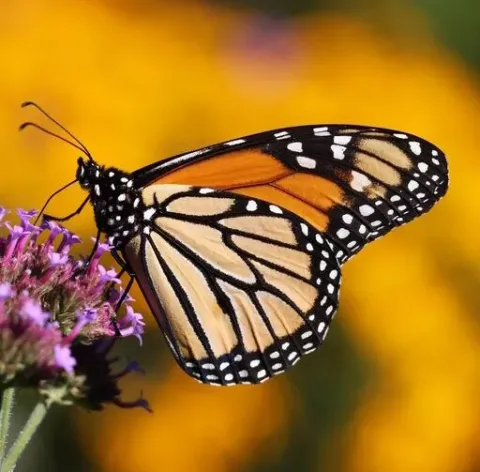
Known for its migration through the Midwest from Mexico to Canada, the monarch butterfly is one of the most recognizable and charismatic species of butterfly in North America. Larvae of the species rely on milkweed as a host plant; as milkweed is continually eradicated in the majority of the migration zone, the monarch butterfly population continues to decline. In North Dakota, monarchs rely on nectar sources in pockets of native prairie, and can be found on milkweed, bee balm, blazing star, and thistles.
Monarch Butterfly (Danaus plexippus)
Satyrs
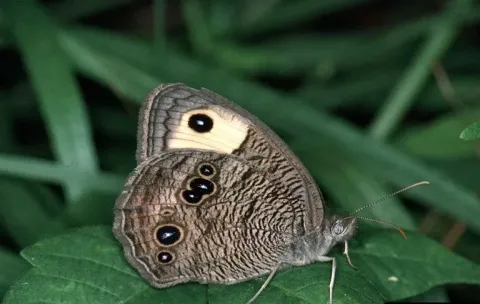
Also known as brown butterflies, Satyrs are abundant in summer in our native prairies. Large spots on the hind and forewings are a form of mimicry and serve as mock “eyes” to frighten or distract predatory birds. Look for the common wood nymph on fleabane, purple cornflower, bee balm, and milkweed.
Common wood nymph (Cercyonis pegala)