
Data Centers: A Guide to Common Questions
What is a Data Center?
Adapted with permission from the University of Minnesota. November 4, 2026
A data center is a facility that houses computer and network equipment, servers and other related equipment for storage, management, processing, and transmission of digital data. Data centers vary in size and function: local governments may encounter small enterprise facilities, edge data centers, hyperscale campuses, or compute-intensive facilities such as cryptocurrency mining (see Table 1).
A data center supports digital services such as storage, computing, cloud services, artificial intelligence, and online applications. There are different types of data centers, and they can have very different local impacts. Local jurisdictions may specify different requirements based on varying sizes and functions or apply more uniform rules across data centers as a single category (see Section Defining Data Centers).
Knowing the Type of Data Center in Question is Key
Different types of data centers have varying requirements that may impact local decision-making. Local government decisions – from community engagement to local ordinances – may benefit from tailoring discussions to specific types of data centers.
Enterprise data centers are often smaller facilities that support a company’s own computing needs. Edge data centers are located closer to end users and are used to collect, process, or transmit data with lower delay. Hyperscale data centers are very large facilities built to support large-scale cloud, artificial intelligence, or other high-volume digital services. Cryptocurrency mining facilities are specialized computing facilities used to support cryptocurrency transactions.
These categories matter because they do not have the same requirements.
A small enterprise facility may look like another commercial building with added electrical needs. A hyperscale or artificial intelligence (AI) campus may use electricity equivalent to a city, with larger land use, power, cooling, and backup-power questions. Crypto mining is different again because operators may be more willing to shut down when electricity prices are high or the grid is stressed.
Other definitions of data centers focus on ownership or use of the facility. For example, a colocation data center refers to situations where a company owns and operates a data center, but rents space in that data center to other users. Contracts between the owner and users in a colocation facility detail the services agreed to, including space, power, cooling, and security. The ownership and use model – and whether a local government is directly interacting with the end user – may influence development agreements and negotiations oTable 1. Different types of data centers and their requirements
| Edge | Cloud/ Enterprise | Colocation | Hyperscale | Crypto Mining |
|---|---|---|---|---|
| Note: This table includes crypto mining which often behaves differently than other data centers in that it can ramp electricity use up or down more easily, some local jurisdictions include crypto mining along with other data centers and others explicitly differentiate. | ||||
| Smaller, localized facilities closer to end users | General computing, storage, and internet services | Large, multi-tenant or shared facilities that support various users | Large facilities or a campus of multiple facilities | Specialized computing for cryptocurrency transactions |
| 1-10 MW | 1-20 MW | Varying sizes (from smaller enterprise to large hyperscale) | 20-500+ MW | 5-100 MW |
| <1-40 acres | 1-10+ acres | 50 - 500+ acres | 2-20 acres | |
Data Centers: A Guide to Common Questions
Adapted with permission from Penn State Extension. June 5, 2026
Communities across the country are being asked to consider data center development proposals that involve complex decisions related to land use, energy systems, water resources, infrastructure capacity, and long-term economic development. Data Centers: A Guide to Common Questions is designed to help communities engage in informed, transparent, and respectful conversations about proposed data center development. It is not intended to advocate for or oppose any specific project. Instead, it provides a structured set of questions communities may consider when evaluating proposals in the context of local priorities, land-use planning, infrastructure capacity, and long-term resilience.
The questions included here are meant to encourage thoughtful evaluation and fact-based discussion among local officials, residents, businesses, industry, and other stakeholders. Because each community and each project is different, the checklist should be viewed as a starting point rather than a complete list of considerations. Communities should adapt or expand these questions to reflect local conditions, policies, and priorities.
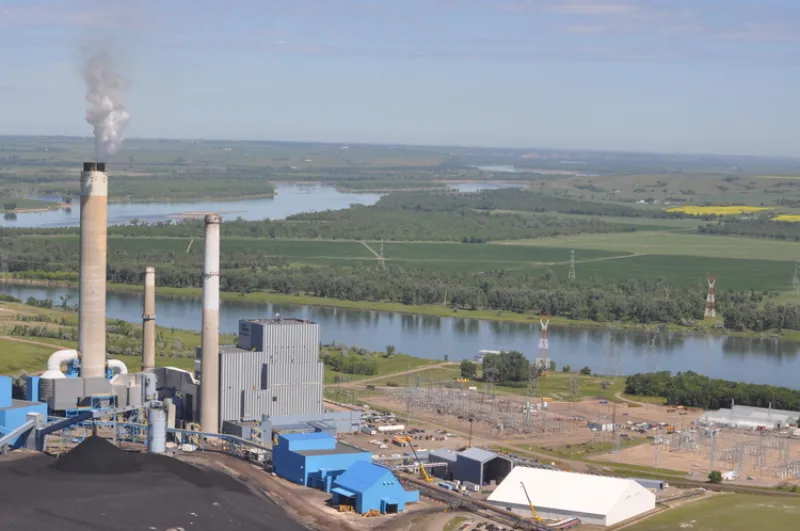
Power/Electricity
Power Demand and Source
- What is the total estimated power demand (MW or GW) per year (0-5 years, 6-10 years, 11-20 years, and 21 years and beyond)?
- Where will the power come from: grid, onsite generation, or both at 0-5 years, 6-10 years, 11-20 years, and 21 years and beyond?
- If onsite generation is used:
- What source will be used (e.g., natural gas, diesel/oil, renewables, jet turbines, small modular nuclear [currently projected by 2035], etc.)?
- Is it planned for initial development or future phases?
- How does this project’s estimated energy demand compare to other large regional loads (existing or planned)?
- What percentage of the total regional energy demand will the project represent at 0-5 years, 6-10 years, 11-20 years, and 21 years and beyond?
Infrastructure and Capacity
- Are new substations, transmission lines, or grid upgrades required?
- What power infrastructure will be located onsite?
- Who is responsible for capital and long-term maintenance costs?
- How will this project affect local and regional grid capacity and availability for other users at 0-5 years, 6-10 years, 11-20 years, and 21 years and beyond?
Power Reliability and Operations
- How will the facility operate during:
- Power interruptions (backup generation type, duration, testing frequency)?
- Periods of high demand or grid stress/fragility?
Cost and Rate Impacts
- How will this project impact electricity rates for:
- Residential customers at 0-5 years, 6-10 years, 11-20 years, and 21 years and beyond (increase vs. decrease)?
- Commercial and industrial customers at 0-5 years, 6-10 years, 11-20 years, and 21 years and beyond (increase vs. decrease)?
What is the projected Power Usage Effectiveness (PUE)?
- PUE = total power supplied to a facility divided by the power used to run IT equipment within the facility (lower scores are generally reflective of greater efficiency).
- Does the estimate reflect real-world operating conditions or ideal design targets?
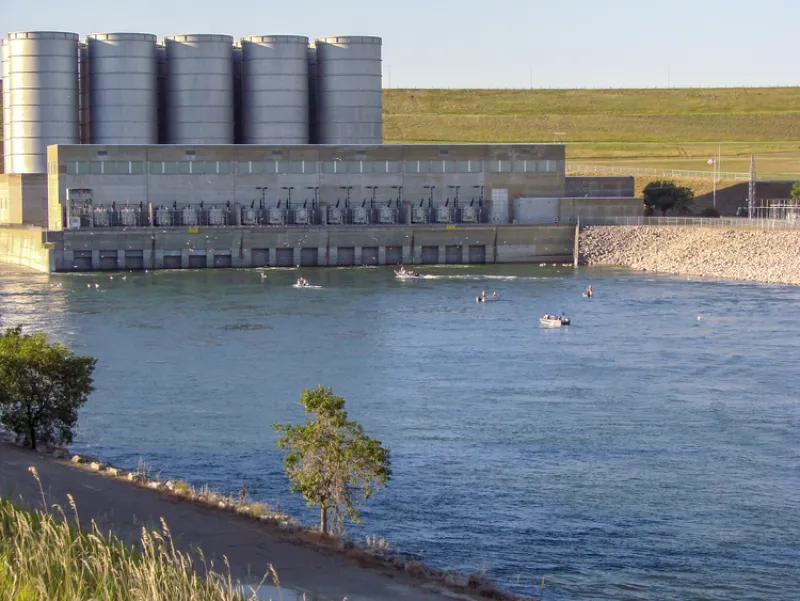
Water
Water Demand and Sourcing
- What are the projected peak, average daily, and seasonal water needs for cooling, humidification, and other activities, including landscape irrigation or wastewater treatment, at 0-5 years, 6-10 years, 11-20 years, and 21 years and beyond?
- What is the water source (existing municipal provider, new well(s), surface water, combination of sources, other)?
- Is non-potable water use an option?
- Type of non-potable water - reclaimed wastewater on site or other industry, harvested rain water, saltwater, brackish groundwater, treated effluent, other?
- If so, does it require pre-treatment?
- Has an independent water feasibility study been completed to (a) investigate how the project compares with other local and regional large water users, (b) determine if an adequate local water supply exists, and (c) identify local private wells and natural watercourses that may be impacted negatively?
Water System Impact and Planning
- Is a watershed or regional capacity analysis needed or completed?
- What is the estimated total water use, including both:
- On-site water use (direct use) needs at 0-5 years, 6-10 years, 11-20 years, and 21 years and beyond?
- Water used for electricity generation, indirect use needs at 0-5 years, 6-10 years, 11-20 years, and 21 years and beyond?
- Water used for wastewater treatment?
- What portion of withdrawn water is consumptive (lost to evaporation)?
- How will the facility operate during drought or water-restricted conditions?
- How does the project compare with other major water users in the area or region (e.g., brewery, power generation, food processor, etc.)?
Cooling and Water Use Design
- What cooling approach is proposed (i.e., air-cooled, closed-loop, evaporative/open-loop, hybrid, other)?
- How will the cooling system selected affect:
- Water needs?
- Wastewater discharge volume?
- Wastewater discharge temperature?
- Energy demand (i.e., more on-site air cooling to reduce direct water needs, but likely results in increased indirect water consumption by increasing demand for electricity produced by geothermal power plants)?
- What is the data center's projected Water Usage Effectiveness (WUE)?
- WUE = total water used for cooling (liters) divided by the total energy consumed by the IT equipment (kWh).
- Does it include both potable and non-potable sources?
- What improvements could be made to cooling systems to reduce water use over time?
Water Quality, Discharge, and Treatment Infrastructure
- What water treatment (pre- and post-use) may be needed?
- What is the expected quality of any discharged water, including:
- Volume
- Temperature
- Composition (i.e., salts, minerals, biocides, corrosion inhibitors, etc.)?
- What are the cumulative discharge impacts, including interactions with other users (i.e., discharge for the data center alone or combined with other major industries)?
- Will upgrades to water or wastewater infrastructure be required? If so, who pays?
- Will real-time monitoring of water flows and quality be implemented (i.e., installing sensors to continuously monitor for leaks and key water characteristics such as pH, total dissolved solids, etc.)?
- What, if any, water reclamation or reuse strategies are planned?
Water Regulation and Transparency
- Who, if anyone, regulates water withdrawal and discharge in the area, and what permits (if any) are required?
- What are the opportunities for public input if a new water withdrawal permit or registration is required?
- What is the process and timeline for public input?
Private Water Supply Systems and Nearby Water Sources
- For nearby private water sources (wells, springs):
- Will third-party testing be conducted pre-, post-, and long-term (quality and volume)?
- What is the testing radius from the facility and/or withdrawal points?
- What plans are in place to address and remediate impacts to water flow, quality, or volume?
Domestic Water and Sewer Systems
- For nearby domestic water sources (wells, springs, reservoirs):
- Will third-party testing be conducted pre-, post-, and long-term (quality and volume)?
- What is the testing radius from the facility and/or withdrawal points?
- What plans are in place to address and remediate impacts to groundwater recharge, quality, or volume?
- How will the project impact water and sewer rates for:
- Residential users (short-term vs. long-term and increase vs. decrease)?
- Commercial users (short-term vs. long-term and increase vs. decrease)?
Broadband Infrastructure and Capacity
- Proximity to existing fiber infrastructure, or is there a need for new installation?
- What is the required capacity and size of fiber optic cabling?
- What level of redundancy and resilience is planned for the network?
- What are the potential impacts on or benefits to local broadband capacity and access?
- Will the fiber optic cable network need to be expanded or upgraded?
- Aerial fiber vs. underground (trenching) installation or both?
- What distance will fiber-optic cable need to be run?
- Other broadband supporting infrastructure needed?
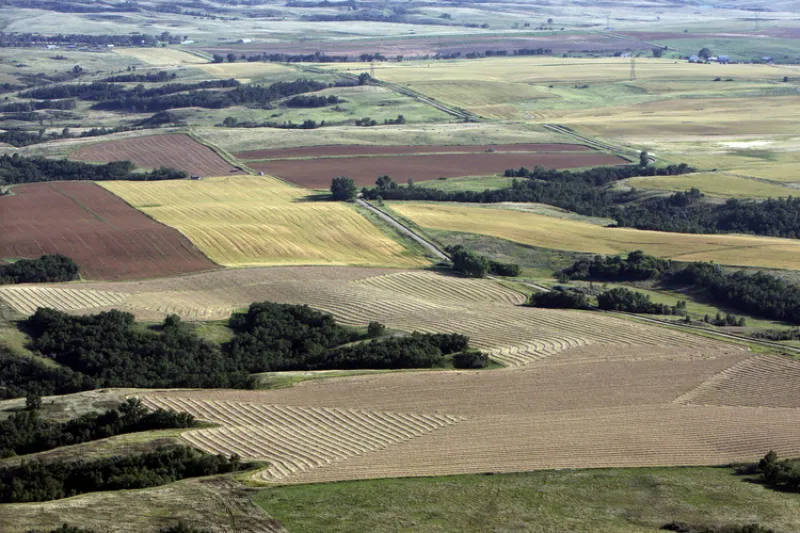
Land Use
Site Suitability and Compatibility
- What is the site’s proximity to power, water, fiber infrastructure, residential neighbors, or other sensitive zoning or environmental locations?
- How much land is required, and is it compatible with surrounding uses?
- What are the visual, lighting, and noise impacts on nearby properties?
- Long-term compatibility with adjacent land uses?
- Does this development limit future land-use flexibility or alternative economic uses?
Natural Hazards and Environmental Conditions
- Are there flood, wildfire, or other natural hazard risks?
- What are the erosion and sedimentation control plans?
- Stormwater mitigation and management plans?
Land Preservation and Policy
- Conservation programs' impacts?
- Agricultural Security Areas impacted?
- Farmland preservation easements impacted?
- Tax abatement programs (e.g., Clean and Green) impacted?
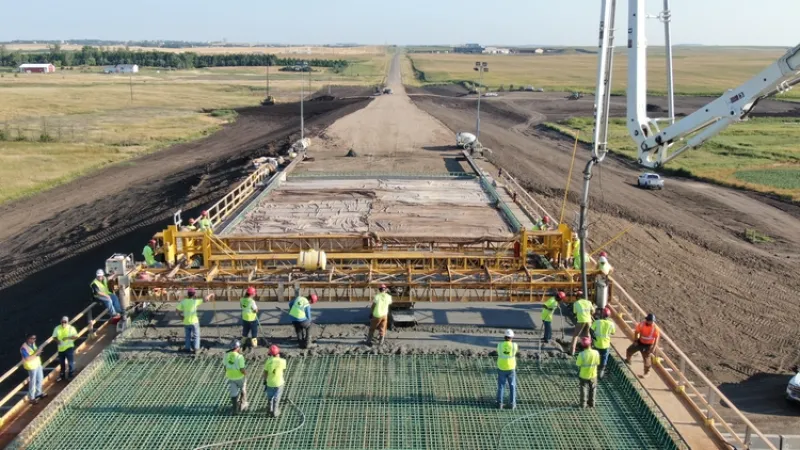
Workforce/Jobs
Preconstruction
- How many full-time equivalent (FTEs) jobs?
- What are the key occupation groups and average anticipated salaries?
- Will local contractors or suppliers be used?
Construction
- How many jobs (FTEs)?
- Anticipated construction duration?
- Will local contractors or suppliers be used?
- What is the ratio of temporary (construction) vs. permanent (operational) jobs?
Post Construction/Operations
- Onsite
- How many jobs will be onsite full-time (FTEs)?
- What are the key occupation groups and average anticipated salaries?
- Will local contractors or suppliers be used?
- Are the full-time jobs contracted services or direct hire employees?
- Regional (serving multiple data centers in a region)
- How many jobs will be regionally full-time (FTE’s)?
- Will regional contractors or suppliers be used?
- Are the full-time jobs contracted services or direct hire employees?
- What are the key occupation groups and average anticipated salaries?
- Workforce development or training partnerships, if any?