

Bees of North Dakota
Of all the living vectors which carry pollen, the most prolific pollinators are bees. Bees are driven to visit flowers to collect pollen as a source of protein for themselves and their young. Bees possess special anatomical properties such as body hair and pollen sacks which equip them to collect and transfer pollen.
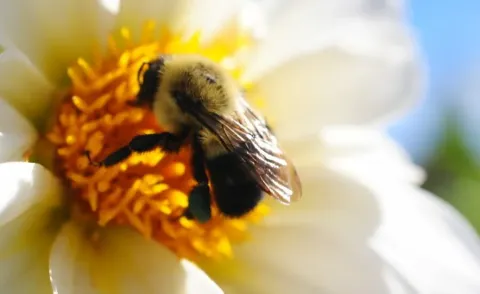
Bumblebees
(Bombus)
Bumble bees are able to forage in colder temperatures and lower light levels than other species, making them particularly suited to higher elevations and northern climates. Species from colder climates (like North Dakota) tend to have extra body hairs that collect pollen and double as insulation. Bumble bee queens nest in a variety of habits including abandoned rodent dens, garden debris, and thick tufts of grass.
Forages on: Anise Hyssop (Agastache foeniculum), Purple prairie clover (Dalea purpurea), Purple coneflower (Echinacea pallida), Prairie smoke (Geum triflorum), Maximilian’s sunflower (Helianthus maximilianii).
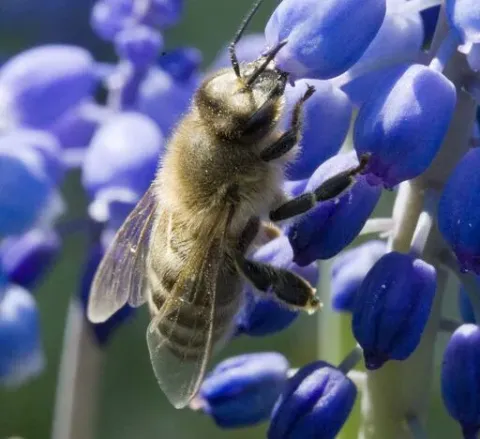
European Honey Bees
(Apis mellifera)
While not native to the United States, the European honey bee is one of the most vital pollinators in North Dakota. Most of the honey bees in our state are domesticated, and there are over half a million commercial colonies which produce over two million pounds of honey annually. Honey bees are eusocial with a queen and thousands of her workers who perform all the jobs necessary to keep the colony safe and healthy.
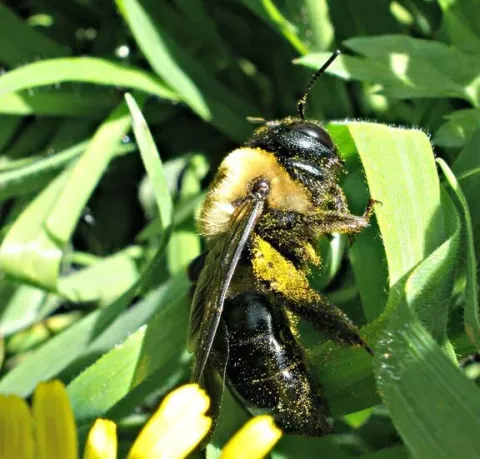
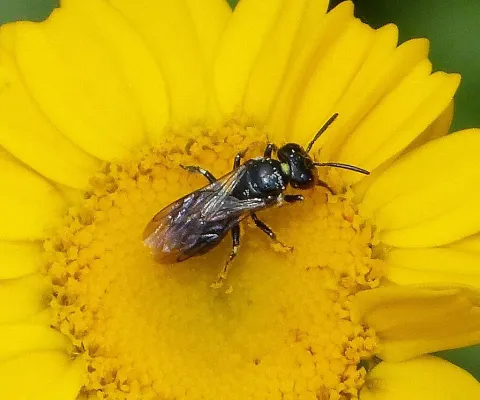
Carpenter bees
(Xylocopa)
Carpenter bees are equipped with powerful jaws they use to chew through wood to excavate tunnels in fallen logs, hollow stems, and wooden structures. Somewhat social bees, carpenter mothers and daughters will build nests near each other and often share labor such as foraging or nest-guarding duties.
There are two genus of carpenter bees in North Dakota: Xylocopa (large carpenter bees) and Ceratina (small carpenter bees).
Forages on: Prairie coreopsis (Coreopsis palmata), Wild Lupine (Lupinus perennis), Prairie cinquefoil (Potentilla arguta).
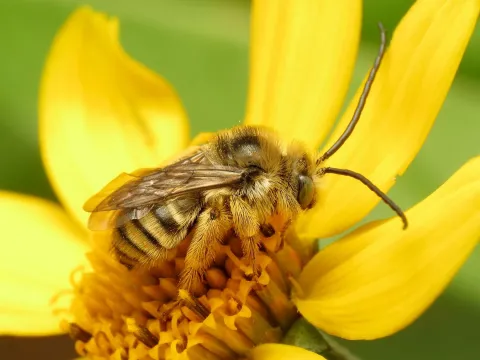
Long-Horned Bees
(Eucerini)
Long-horned bees are named for the unusually long antennae sported by males of this genus. These bees are fast fliers with large, hair bodies. There are specialist and generalist long-horned bees which together pollinate many species of plants including prairie clover, vetches, alfalfa, and sunflower. Long-horned bees prefer sand or clay soils, and make nests in flat areas or shallow embankments.
Forages on: Anise Hyssop (Agastache foeniculum), Prairie coreopsis (Coreopsis palmata), Purple coneflower (Echinacea pallida), Maximilian’s sunflower (Helianthus maximilianii).
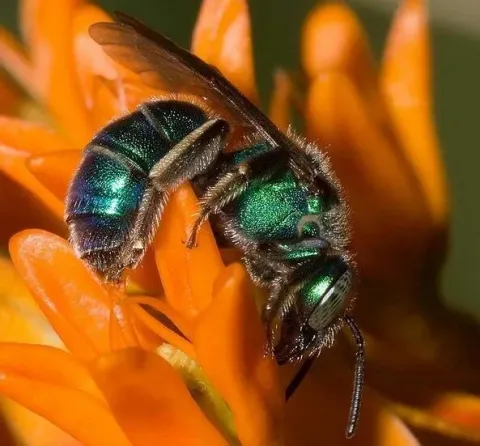
Sweat Bees
(Halictidae)
Halictidae is the second-largest family of bees, with more than 3500 species in the 76 genera. This family of bees exhibits many different social behaviors depending on the species ranging from solitary to communal. Most species nest in the ground, though a few nest in rotting wood. All sweat bees have short tongues which make them best equipped to forage on flowers with shallow nectar deposits. Many species are known for their metallic green or blue coloring.
Forages on: Nodding onion (Allium cernuum), American pasqueflower (Anemone patens), Butterfly milkweed (Asclepias tuberosa), Purple prairie clover (Dalea purpurea), Purple coneflower (Echinacea pallida), Prairie smoke (Geum triflorum), Maximilian’s sunflower (Helianthus maximilianii).
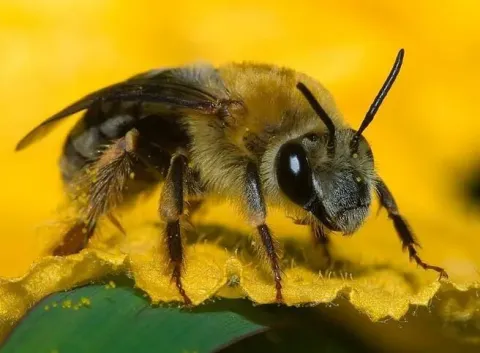
Squash Bees
(Peponapis)
Squash bees are medium to large fast-flying bees that demonstrate a preference for squash patches. Squash bees are bigger and hairier than bumblebees, faster fliers, and begin foraging early in the morning as soon as squash blossoms open; these attributes make Peponapis especially equipped to pollinate squash plants. Watch for these bees in your vegetable garden, and make sure to plant a row of pumpkin, butternut, or acorn squash to attract them.
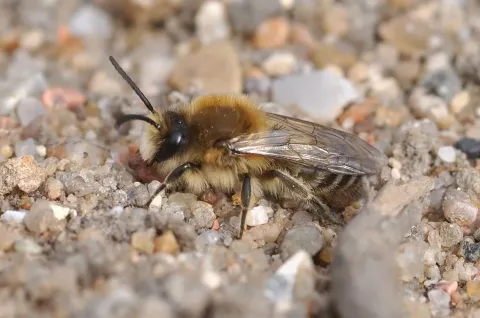
Polyester Bees
(Colletidae)
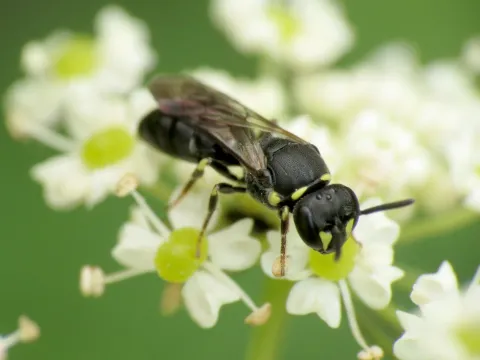
Masked Bees
(Hylaeus)
Small and slender, masked bees are mostly black with white or yellow markings on their faces. They have very little body hair and therefore can be easily mistaken for wasps. Hylaeus species in North America are all generalist eaters; these bees consume all the pollen and nectar they find while foraging and regurgitate it for their young when they return to their nests. Masked bees nest in wood, so equip your garden with an old stump or trunk remnant to enhance habitat.
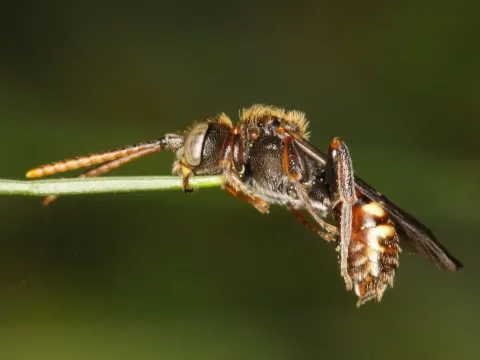
Cuckoo Bees
(Nomadinae)
Cuckoo bees are medium-sized bees with bright pearlescent bands crossing their abdomen. These are summer bees, seen out and about in June through September foraging on a wide range of native and agricultural pollen sources. Cuckoo bees nest in large aggregations in the ground in sunny, open areas. The alkali bee (Nomia melander) is managed commercially as an alfalfa pollinator.
Forages on: Butterfly milkweed (Asclepias tuberosa), Prairie coreopsis (Coreopsis palmata), Purple prairie clover (Dalea purpurea).
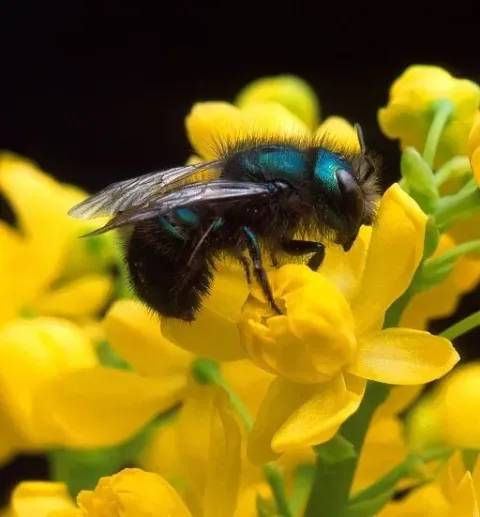
Mason Bees
(Osmia)
Mason bees are named for the way they use mud to build walls inside their nests. Like leaf-cutting bees, masons are known for some creative flair when constructing their nests, often incorporating leaves as well as foliage to line the mud walls. Masons typically utilize existing tunnels such as those left behind by other solitary bees, wood-boring beetles, and rodents, or the hollows of dead branches. Because of their wide range of nesting habits, masons readily utilize artificial nests (bee houses).
Mason bees tend to be messy pollen collectors, and therefore are excellent pollinators.
Forages on: Wild Lupine (Lupinus perennis), Golden alexanders (Zizia aurea), Wild geranium (Geranium maculatum).
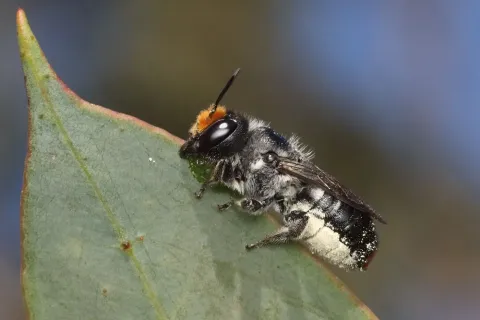
Leafcutting Bees
(Megachilidae)
The name Megachilidae means “large lipped” and refers to the huge mandibles with which all species in this family are equipped. Leafcutting bees use these mandibles to cut circles out of leaves to line brood cells within their nests. Leafcutting bees nest readily in wood and other preexisting tunnels such as hollow stems or bee houses.
Forages on: Anise Hyssop (Agastache foeniculum), Nodding onion (Allium cernuum), Butterfly milkweed (Asclepias tuberosa), Prairie coreopsis (Coreopsis palmata), Purple prairie clover (Dalea purpurea), Purple coneflower (Echinacea pallida).
Mining Bees
(Andrena)
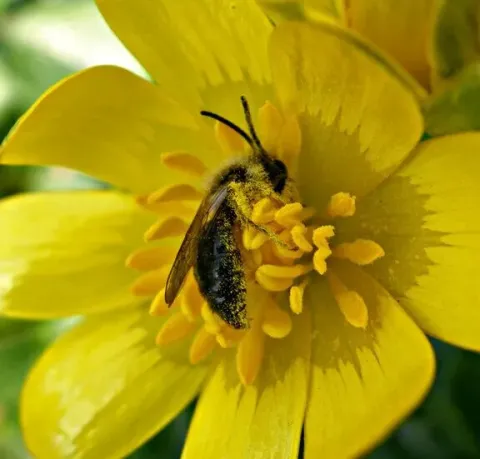
To find mining and digging bees in your landscape, look for anthill-like mounds in lawns and bare patches of soil. Mining bees nest in aggregations with numerous underground nests side by side. While these solitary bees don’t share labor as social bees do, mining bees live in nest clusters to intimidate predators by being present in large numbers.
Forages on: American pasqueflower (Anemone patens), Purple coneflower (Echinacea pallida), Wild Lupine (Lupinus perennis), Prairie cinquefoil (Potentilla arguta).
